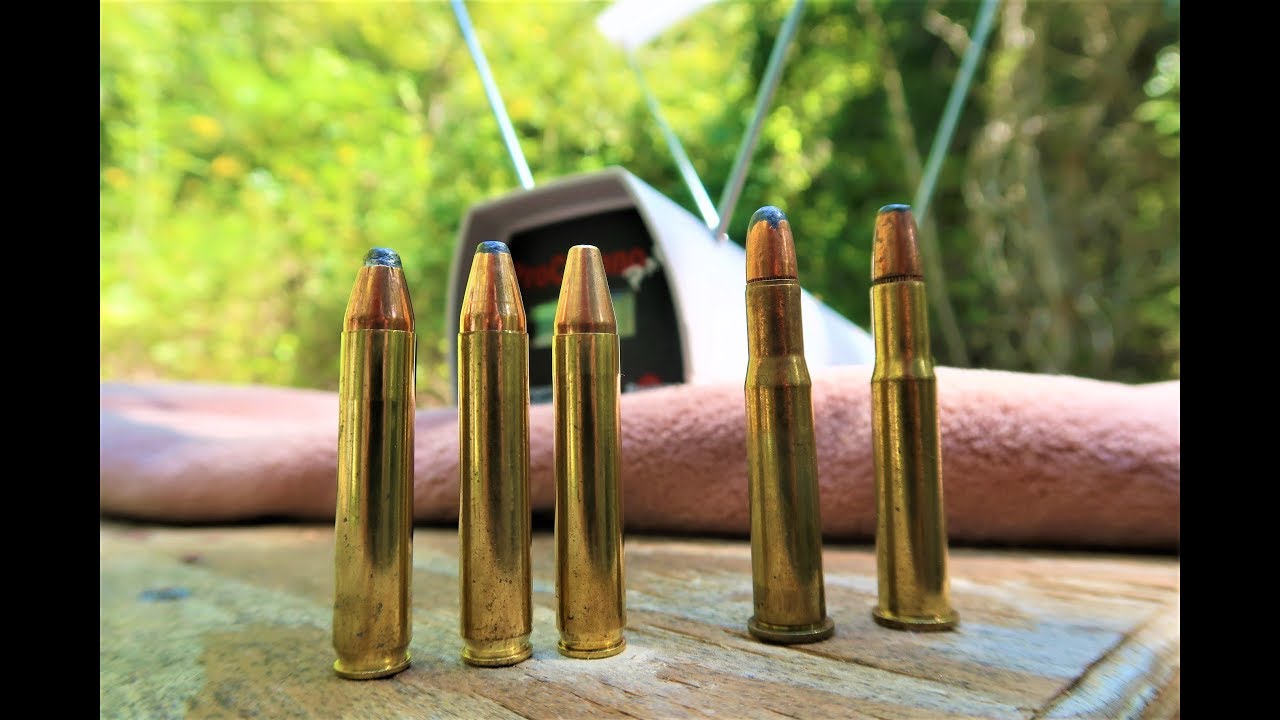
After finishing the project I called the WWSD Hunter 350 and got it running, I ran into some issues. As a results of thinking it over, I'm re-barreling the rifle from 350 Legend to 300 Blackout. What happened afterward has turned into a bit of a saga.
The What Would Stoner Do or WWSD concept was a joint venture by folks at Forgotten Weapons and InRange TV and others to produce a rifle they envisioned to be what Eugene Stoner, the inventor of the AR-15, would do today with our modern materials and machines. What they came up with was a rifle with a combination lower receiver and stock made of polymer and a upper receiver that uses a pencil profile barrel and carbon handguard to make the whole rifle very lightweight. Like 5 pounds light. The lower receiver is made by KE Arms as the KP-15. I used that lower along with a Lancer carbon fiber handguard but went with a round profile. I wish I had used their octagonal unit instead of the round but it's not an issue. I used an inexpensive AR Stoner barrel from MidwayUSA since I didn't want to put a ton of money into it and there aren't too many options for 350 Legend barrels. The goal was to replace my 1970's era Winchester 94 in 30-30 with a modern rifle platform while being ballistically similar.
The first reason I'm changing is ammunition availability. Here in Georgia, 350 Legend is not a high priority cartridge. It's meant for people in straight-wall states like Ohio. The only ammunition I can regularly buy is the 180 grain Winchester Power Point or the 145 grain FMJ. The FMJ doesn't mean much to me but I found that it didn't run in my gun and would immediately experience a failure to feed. The 180 grain Winchester soft points ran fine enough but I really want the Federal Fusion load. Turns out, I can't find them locally or online. My concern here is, even if I could find the Federal Fusion load, will they even run? That's just potentially more money spent testing. Due diligence says I should test everything I can but I won't be doing that. The only other options are another Winchester load, the 150 grain XP round or Hornady's offerings. The SUB-X could be a cool load but I'm not sure that I'm looking for another subsonic hunting round. My Remington 700 in 300 Blackout is already setup for subsonic work specifically. It works very well by the way. I took a doe in November 2022 at about 40 yards with those SUB-X in 300 BLK. That said, there are more choices for 300 Blackout than for 350 Legend since 300 has been around a lot longer.
The second issue I ran into was with the build. I'm getting issues with zero. I had zeroed the gun then gone home. When I went back to the range to verify zero for the 2022 hunting season and that the gun was working correctly, the first round was way off. I adjusted then took a test shot finding I had to adjust back to where I was. I haven't always been able to replicate the issue but replication requires ammunition. Since the gun doesn't want to run the cheaper stuff, it becomes more expensive just to test with the 180 gr Winchester loads which is already hard to find. When I do find it on the shelf, it's usually one box.
The zeroing could be an issue with how I mounted the JMAC Customs muzzle device or maybe with the scope's mount or the scope itself. I did find that the Primary Arms 3-9x Classic is only intended for .223 Remington. 350 Legend does have a higher recoil impulse and the scope might not be able to handle that. At this point, I'm not sure as to what is causing the issue with the shifting zero and ammo is too expensive and hard to get for 350 Legend for me to properly test. As a result of all the issues with this build, I'm switching to something that I know works; 300 Blackout.
I have successfully taken deer with 300 Blackout even in it's subsonic form and I've really started to appreciate the little 30 caliber cartridge. When I was conceptualizing the gun, I had considered another cartridge called 6mm ARC. It's a pretty impressive cartridge on paper. To re-barrel for 6mm ARC would be replacement parts like the bolt, magazine and barrel. Then I would have to find ammo that's even harder to get than 350 Legend. That alone is enough to push 6mm ARC out of the running. Same goes for 6.5 Grendel, 7.62x39, 9x39, and 6.8 SPC. 5.56x45mm is an option since I have a spare barrel and ammo for it but I already have several guns in 5.56 including at 16 inch barrel gun. While my Remington 700 build is in 300 Blackout, that setup is geared toward subsonic ammunition specifically so a supersonic or multi-load capable build seems more prudent. 300 Blackout is bottlenecked and should automatically have a reduced chance of feeding issues compared to 350 Legend in this platform. I already have a bunch of 300 Blackout ammo in my inventory so I can test more in depth. Basically, by switching to 300 Blackout, I cam minimize troubleshooting efforts and help with ammo standardization.
A cool thing about the replacement barrel from Anderson is the profile. The barrel uses a pistol length gas system and from the gas block forward, the profile is the same. It's almost a heavy profile. Anderson claims it's a government profile but there's a lot missing from that. It's probably partly true as the space behind the block is narrow and contoured nicely but the gas system is so short making the layout goofy. The upshot on this profile means that I can have a gunsmith trim the barrel back to anything useable. Remember that 16 inches of rifle barrel is merely a tax issue. I had considered a 13.7 pin and weld job and I've tinkered with the idea of trimming down to match the barrel to the handguard. If the NFA 1934 dies, then I would just cut it down to 10 inches and replace the handguard with another Lancer unit. That would reduce the weight quite a bit. It would make the rifle massively more user friendly with a 10 inch barrel. If I settle on a length, I could also have a gunsmith flute or turn down the contour to reduce weight even more so. Sadly, though, it turns out that the 350 Legend barrel is actually lightly lighter by around 1.5 oz so I ended up making the gun slightly heavier.
Even still, with the rifle around 7.8 lbs without the silencer, this rifle goes from being a hunting specific gun to a rifle that I would easily carry around the homestead without too much issue. Turns out, I'm building another farm gun but I really like that concept. During the 2022 hunting season, I took my Marlin 1894 CST, ArgentGranjero, around as I would do work in case a deer made itself available for my freezer. I also have carried around a Marlin 60 for squirrel hunting while I did a little trash pick up on the Western edge of the property. All in all, I found that I appreciate the lighter guns but I will say that I do wish the Marlin had provisions for a weapon mounted light. My primary AR-15, ProjectCarbine, with everything is pretty heavy and I've taken to leaving it at home. I prefer a semi-auto for defense and general use application so having a much lighter weight semi-auto rifle in a caliber similar in use to 5.56 will be great. That really puts the What Would Stoner Do Hunter Mod 1 into a good position as a Farm Gun. Maybe I should start calling it the WWSD Farmer.
After completing the re-barrel and re-assembling the gun, instead of mounting the PA 3-9x scope I had used originally, I opted to use a SIG Remeo5 red dot. Since I don't trust the mount the PA is using currently, this seemed like a good idea. When I got out to the farm, I successfully ran a few subsonic Federal American Eagle rounds. That indicated I wouldn't need to makes changes to the adjustable gas block. It ran without issue everything I fed the rifle that day. I pulled out my Caldwell chronograph and ran a string of SIG's 120 gr Elite all copper, hunting rounds. The average of the 5 shot velocity I got with the 16 inch barrel was 2441.8 fps. That's better than the 2250 fps on the box. I don't know what test barrel length they used to get that. I'm thinking around 10 or 12 inches. That will come up later because it's caused me to reconsider the project completely.
The rifle is loaded with a 20 round magazine full of 220 gr subs.
After I completed my other chores for the day, I setup my target stand and a IDPA with a white back to zero. I had planned on zeroing for 50 yards previously. After using a few cheaper Remington 120 gr as sighters, I walked in the rest of the zero with the SIG 120's very quickly. I couldn't believe how much easier it was with the 300's than the 350's. To confirm this wasn't a fluke, I took a quick test shot on a 6 inch steel gong I have at 50 yards. The bullet absolutely hammering that gong broke the thick gauge wire used to hang the target.
For fun, I loaded a couple of subsonic 220 gr rounds and tested one on the paper target to check for bullet drop. I got about 1 inch or so down. I went back to the 50 yard line and sent a second test round to the 50 yard gong and connected successfully after adjusting for a slight drop. At this point, I'm excited.
This rifle is running nicely, it handles well and feels light enough for me to carry around the farm without issue. I've successfully zeroed the rifle and it shoots both supers and subs very well. I stopped for a minute to consider the changes and go over my accomplishments for the day. I pulled up an online ballistic calculator to run the numbers I got from the chronograph. The below chart is calculated using SIG's posted BC of .290 and the velocity numbers I got of 2441 fps. I assumed a 2.6 inch scope height and 50 yard zero.

Based on testing done by folks like the Chopping Block and Tools & Targets who's videos are on YouTube, the SIG rounds will still expand around 2060 fps. In Tools & Target's video, the bullet expanded to around .40 caliber at an average velocity of 2059 fps. The Chopping Block's video had an average around 2100 fps with much better expansion. I don't know what the absolute minimum velocity is for these bullets but the ballistic chart says around 150 yards is pushing around 2020 fps. It's possible these bullets will still expand at the low 2000's range. Until someone can do further testing I'll say that around 150 yards is the absolute ragged edge this load can take a deer with the bullets still expanding. Pay further attention to the bullet drop. The 50 yard zero has a secondary zero right at 150 yards; -0.02 inches down. The bullet is up around 1 inch at 100 yards. Essentially, this rifle is now zeroed so I don't have to hold over. As long as the deer I'm trying to take is between 150 yards, I just need to hold right on the vitals. This flight path is far better than the 350 Legend had from this rifle.
With the new dope chart and the gun zeroed with the red dot I'm not wanting to making changes to the sighting plane for a while. Plus ammo is expensive. For the foreseeable future, I will be running the WWSD Hunter Mod 1 with a red dot but I've been looking at adding a Primary Arms 3x micro magnifier or find a 5x micro like the SIG Juliet. They add extra weight but given that they can be setup with a quick detach mount, I might leave it in the truck during the off season and add it during the deer season. I would be inclined to just run the red dot but my astigmatism is so bad even with good glasses, I struggle to see some smaller details at distances like 50 yards. I can't guarantee I can make a clean shot on a deer's vitals past 75 yards.
Testing day turned out to be pretty great. Having seen the rifle come together was really rewarding. I truly wished I had more ammo to burn because shooting the WWSD Hunter Mod 1 was such a pleasure. The Dead Air Wolfman in the short configuration keeps the subsonic rounds reasonably quiet. The supersonic loads didn't seem to ring my ears but they still have a loud report. I would like to test more subsonic loads like the Hornady SUB-X for the hold overs to see if I could just use this rifle to hunt with instead of the Remington 700 I built. I will continue to keep the WWSD Hunter with me as I go about projects and chores over the next year to see how it does.
Editor's Note: The original article was a mess and was missing a ton of data. Some of the data was just wrong. The image above was taken without removing the cartridges that are stored in the butt stock's compartment. There's around 6 rounds of 350 Legend stored there skewing the weights. The rifle is actually more like 7.8 lbs without the silencer and around 8.7 lbs with the Dead Air Wolfman.